7 Habits of Highly Effective Homemakers

If you’ve ever wondered how some women seem to thrive in motherhood and homemaking while others struggle with the mental, spiritual, and physical demands of it, you’re not alone. I used to be an overwhelmed slob myself, but I met a man whose standards and expectations for his own life inspired me to want the same for mine. I decided to meet that challenge.

Save This Page
I eventually married him and gradually transformed myself and my life into something I’m proud of. Not because I’m perfect, because that doesn’t exist, but because I’ve faced my challenges and kept growing through them.
And I’m proud of how far I’ve come.
It didn’t happen overnight, and it wasn’t easy. It still isn’t. But I’ve discovered that this work brings deep meaning and contentment. What I’ve learned is that homemakers and mothers who thrive in their roles, rather than just survive, share certain characteristics and habits, even if they aren’t entirely aware of them.
I want to talk about those things because they’re not talked about enough, if at all.
Highly Effective Homemakers Put Themselves First
You can’t take proper care of your home, your children, your marriage, or your relationship with God if you are a shivering mess of a human being.
You just can’t.
You need to be properly rested, fed, and bathed. I don’t want to see any more videos of overwhelmed mothers crying in closets, saying they haven’t eaten or bathed in days. That isn’t normal. Stop trying to normalize it.
Stop treating this strange form of mommy martyrdom as something everyone must live through.
Putting yourself first doesn’t mean rejecting your child when they need you, and it doesn’t mean spending large amounts of time away from them. It means you are rarely in a frame of mind where you need to escape. It means you don’t dread playtime or daily interactions because you feel content and calm most of the time.
You’re receptive to them and actually enjoying motherhood.
My husband and I practice attachment parenting, so trust me, I don’t spend much time away from my boys, especially when they are babies.
You need to create an environment where you aren’t constantly overwhelmed or dissociating, doom scrolling, chasing cheap dopamine, snapping over small things, or crying as a regular part of your day because of stress and anxiety.
Related Article: Happy Homemaking & The Mother’s Dopamine Menu
So how do you get there?
It doesn’t happen through willpower alone or by saying “by the grace of God” repeatedly while your mental health and home life spiral. My mother used to say, “God helps those who help themselves,” and that phrase stuck with me since childhood, even though I didn’t fully understand it until recently.
The truth is, no one is coming to save you from the mess you’re in. You have to take the first step yourself, followed by a million small ones. And if you don’t, nothing will change. Actually, something will change—you will. You’ll slowly become the person you once swore you would never be.
The homemaker and mother need self-care. And self-care is not a green juice or a pedicure. Those things are nice, but they won’t fix your life. Motivation won’t either. It is one of the most unreliable things to depend on.
What we need is discipline and a real plan. This kind of change doesn’t happen overnight, but the longer you delay, the more time you waste. Take it from a lifelong procrastinator, you don’t have as much time as you think.

Prioritize Nutrition & Homemade Food
Everyone can cook from scratch almost all the time.
You can’t function properly if you’re eating poorly. Neither can your family. Real food matters more than most people realize, and when you feed your family from boxes and drive-thrus, you create a cycle of exhaustion and mood swings that affect everyone in the house.
Cooking from scratch isn’t about being fancy or performing some domestic ideal. It’s about survival and stewardship. You’ll save money, feel better, and gain a sense of control that most modern women have lost.
Start with what you already use the most. Replace it with a homemade version. Bread, broth, granola, yogurt, sauce. Learn one at a time until it becomes second nature. You don’t need to be a chef to feed your family well. You just need to stop making excuses and start using what you have.
Take advantage of meal planning, ingredient prepping, freezer meals, and slow cooker recipes.
When you cook real food regularly, your home takes on a different rhythm. This eventually becomes a routine part of your life, and before you know it, setting aside time to prep homemade kitchen staples will just be natural.
The Digital Meal Planning Tool I Wish I Had When I First Became A Wife And Mother
I am creating a meal planning tool for homemakers who are done with last minute dinners and expensive convenience food. If you want a simple and affordable way to feed your family real meals every night, join the waitlist and you will be the first to try it when it launches.
Wake Up Early
Most days I’m up before 6 am.
I start my day by doing nothing productive in the worldly sense. I don’t clean, cook, or check emails. Instead, I go outside to breathe fresh air and feel the sun on my skin. I pray and sometimes read.
I might take a hot bath or go into the hot tub.
After some time doing that, which depends on when my husband or children wake, I start preparing breakfast and a hot, fresh lunch for them to take to work or school.
If your children sense you getting up and wake immediately, and I’ve been in those stages of motherhood, just bring them with you. Give them something quick and nourishing, like a glass of whole milk, to hold them over. Practice quiet time together while you go about your morning routine.
This will depend on the ages of your children and their need to be near you. A mother with a newborn or a one-year-old may not be able to do this yet, and that’s okay. Have patience. Motherhood requires it.
This also depends on two important habits. Making sure your kitchen is clean and ready for the next day before you go to bed is the first.
And make sure you have a reasonable bedtime for yourself and your children.
It isn’t normal or healthy for children to be up late, and it isn’t good for you either. Of course, this can change for special occasions or seasons—children are quite seasonal. It’s easy to get kids in bed by 7:30 in the winter, but in summer, when the sun sets later, I want them to enjoy every bit of it.
We have a cozy bedtime routine, and after the children are asleep, my husband and I go downstairs for about an hour of quiet time together.

Have a Homemaking Schedule
This completely changed my life. I’m not the same person anymore because of it.
A homemaking schedule is an old-fashioned but highly effective practice that was discarded around the same time the word homemaker became something quaint or even shameful to call yourself.
But it’s a necessity. I’m convinced of that.
I’m updating mine as my babies grow into active children and as the seasons change, bringing new routines and needs. My daily rhythm must serve reality, not fight against it.
I have daily, weekly, monthly, quarterly, and semi-annual tasks written out. I print them on legal-sized paper, laminate the sheet, and post it somewhere I’m sure to be reminded of its existence.
Each day, I check off completed tasks. When my husband gets home, he can see what remains and jump in to help.
I never need to answer the question “What do you need me to do?” because it’s written clearly. My husband respects me and the work I do, so he doesn’t question what isn’t done—and I don’t take advantage of him either.
We also have our shared routines listed there, such as the children’s bedtime and our nightly family tidy-up.
Related Article: Create A Practical & Simple Homemaking Schedule That You Will Actually Keep
Yes, it’s hard. You’re not alone.
Join My FREE 7-Day Homemaking Essentials Email Course & Grab my Meal Plan with 50+ recipes
Have a Vision & Plan
Have a vision and a plan for your family and for yourself. The things we pursue and fill our minds with shape the course and spirit of our entire household.
Don’t live in constant survival mode.
I’ve said before that a family and home are much like a business, and every business that wants to grow needs a plan beyond daily operations.
Maybe you plan to homeschool or think you might. Don’t wait. Start researching now because there is much to learn and consider. I started planning this before I was even pregnant with my first.
Maybe you dream of starting a garden or becoming more self-sufficient or productive with the one you already have.
Maybe you want to live more liturgically.
What are your dreams for your children—their education, their character, and their souls? How will you help them grow into the best possible versions of themselves?
Related Article: How I Cut My Family Grocery Budget By Thousands of Dollars

Ask For Help
You cannot do everything yourself, and trying to is one of the fastest ways to burn out.
I know this quite intimately, as my husband and I only had each other through some of the hardest years when we first left the city and moved to a homestead with a newborn. In those early years of our marriage, we were so busy building our respective businesses, renovating the home and land, and learning a multitude of tasks that we passed the babies back and forth like a never-ending relay race.
Thank God for bedsharing, because it’s the only reason I never experienced postpartum exhaustion on top of just regular life exhaustion.
There is no virtue in exhaustion. A wife and mother who is constantly angry, resentful, or on the verge of collapse is not serving anyone well. You were never meant to carry the full weight of a home on your own.
Ask for help, and expect it. Your husband and children are part of the household too. They live in the space you maintain, eat the food you prepare, and use the things you wash. They can and should take part in the work that keeps it running.
If your husband doesn’t know what to do, make it clear. This is where my posted and laminated homemaking schedule comes into play again. I don’t want to answer “what can I do?” every day.
If your children are old enough to make messes, they are old enough to help clean them up. Start small (about 18 months old for basics) and teach them how. It takes time, but it pays off quickly.
Asking for help is not a weakness. It’s leadership. A good homemaker doesn’t do everything alone like some 24/7 indentured servant with a cruel master. She sets the tone, delegates when needed, and keeps order so that everyone can flourish.
When you begin treating homemaking as a vocation rather than an endless list of chores, discipline and order start to feel natural. You stop reacting and start leading. The home becomes less of a burden and more of a living reflection of the family who fills it.
Related Article: My Simple Strategy For Decluttering Your Home

Are Vigilant About Their Work & Minds
A homemaker who is careless in her habits will lose control of her home, and a homemaker who is careless in her thoughts will lose control of herself.
Vigilance is not the same as perfectionism. It is awareness. It is paying attention to what is going on around you and inside of you. It is refusing to let laziness, resentment, or distraction creep in and dictate the tone of your house.
The home reflects the interior life of the woman who runs it. If you are scattered, anxious, or undisciplined, your surroundings will start to look that way too. Order begins in the mind before it reaches the kitchen table or laundry room.
Pay attention to the thoughts that take root throughout your day. What are you dwelling on? Are you feeding bitterness, jealousy, or self-pity? Those things grow fast if left unchecked. Keep your mind focused on gratitude, on duty, on the small tasks in front of you.
Sometimes all you can do is the next thing in front of you. Just do the next thing.
Vigilance also means being deliberate in your work. Notice what is falling apart. Notice what systems are breaking down. Notice what habits are leading you toward chaos instead of peace. Then fix them immediately.
A vigilant homemaker is not frantic. She is steady. She sees what needs to be done and does it. She guards her mind against waste, her time against distraction, and her home against disorder.
Related Article: Cleaning Your Home Semi-Annually & Annually (Fall & Spring Cleaning)
Never Stops Learning & Growing
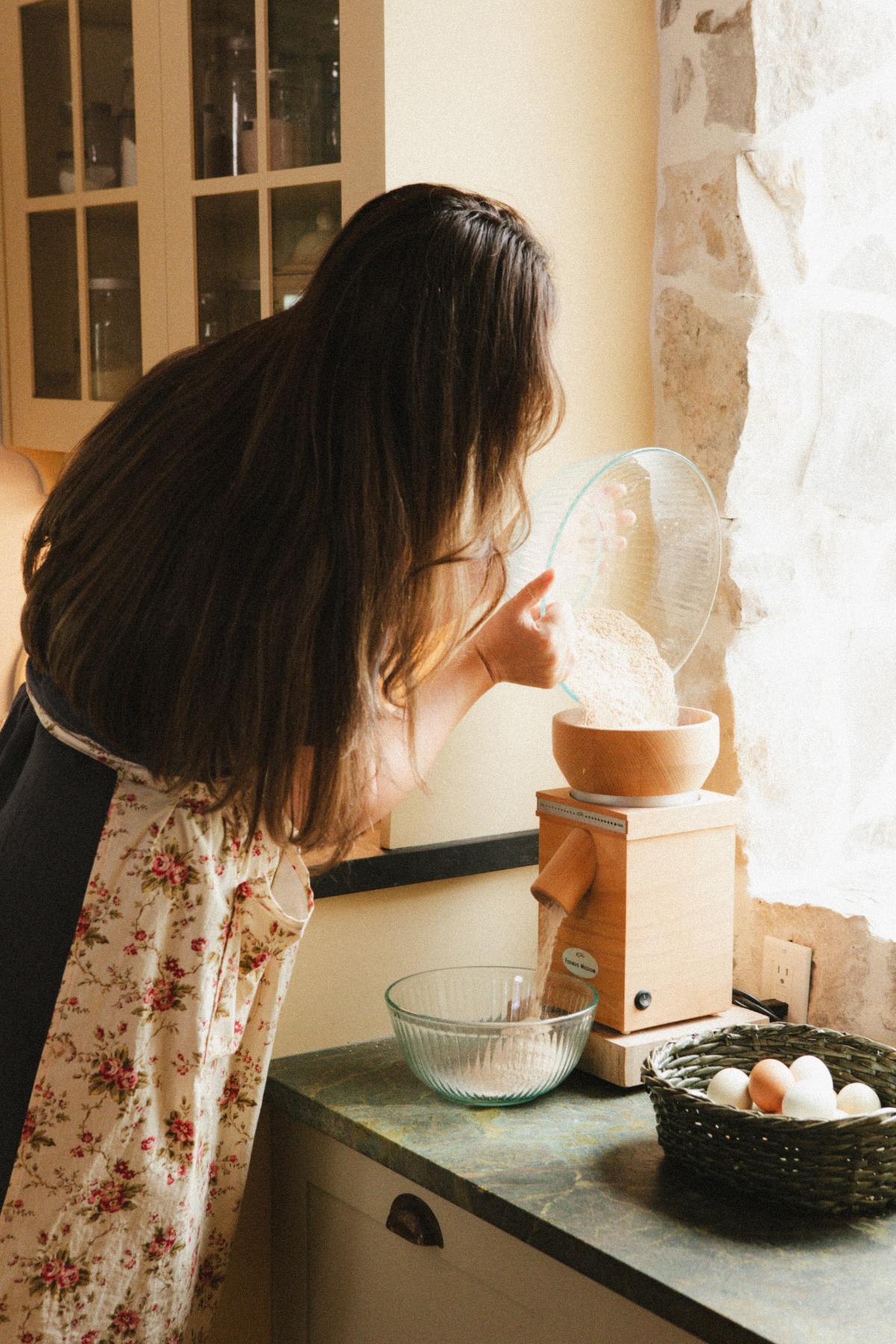
A stagnant homemaker becomes miserable. When your days blur together and you stop learning new skills or improving what you already do, resentment creeps in fast. The house starts to feel smaller, the work heavier, and you begin to think the problem is your circumstances when it’s really your own neglect of growth.
A homemaker’s education never ends. You should always be refining something—your cooking, your gardening, your cleaning systems, your budgeting, your understanding of health, or your faith. The work of the home is too dynamic to ever master completely, and that’s what makes it meaningful.
Learn from other women who are better at something than you are. Read old books, not just modern blogs. Watch how older women manage their kitchens or their children. Pay attention to what actually works instead of chasing novelty or trends.
Growth does not mean constant reinvention. It means depth. It means becoming skilled, calm, and efficient in the ordinary work that forms the backbone of daily life.
And here’s the part most women miss: the more structure and discipline you build into your home, the more freedom you actually have. Systems and schedules don’t imprison you; they create stability. They let you go off-book—to take a spontaneous day at the beach, a trip, a slow morning—without everything collapsing while you’re gone. Because when you come back, the systems are still there, waiting.
The women who thrive in this vocation are always observing, adjusting, and improving. They don’t need applause or constant motivation. They have standards and curiosity, and they treat the home as a living thing that needs to be understood and tended.
If you stop learning, you start declining. Keep moving, even if it’s slow. Learn, refine, and stay sharp.