60+ Extremely Cheap Meals Made from Scratch with Basic Kitchen Staples

I’m going to show you how to take a small handful of whole-food ingredients and pantry staples and turn them into extremely cheap meals for yourself and your family. And don’t worry, I’m not going to send you clicking through dozens of pages for recipes. Almost everything you need will be right here, in one place. You may even want to print this or save it for reference. As well as giving you loads of simple recipes, I’ll add a real budget family meal plan and a budget grocery table.

Me on the homestead surrounded by my Icelandic sheep.

Save This Page

I'll email you a link to this post!

I grew up in poverty, and my mother grew up in post-WWII poverty in the Balkans, so if you’re wondering about my credentials, they come from lived experience.

I’m not poor now, but I know poverty meals very intimately. I still cook and enjoy these dishes because they are wholesome, simple foods that have sustained families for generations through hard times, famines, wars, the Great Depression, and everyday life.

These are heritage American and European recipes, carried by the earliest pioneers, the Amish and Mennonites, as well as Slavic, Italian, and other immigrants. There is nothing bad about them.

Poverty meals do not have to be unhealthy or inferior.

They are basic, sometimes very basic, and short on variety, but they will see you through and keep your children fed without shame.

Related: How to Start Meal Planning for Your Family (Even If You Hate It)

A family photo of the Dziak family.

Monthly Poverty Grocery Budget (Family of 4 with 2 Children)

The figures below reflect real grocery prices as of this writing in 2025. Grocery prices vary significantly by geographical location and grocery store. You can easily create your own table by looking at online prices for the stores you shop at to come up with a realistic grocery budget figure of what you can expect to spend.

I was generous with my list and meal plan; there is plenty more room to cut and places and ways to save money on groceries. I’m trying to stay frugal but still versatile to account for differences in taste; feel free to omit as needed.

ItemApprox. Cost (Monthly)
*Flour (50 lbs bulk bag) – for bread, flatbreads, pancakes, etc.$18–28*
Oats (10 lbs is 12 breakfasts)$8–$16
Rice (20 lbs is 46 cups dry or 140 cups cooked, enough for 3–4 meals per week for a month)$12–$20
Dry Beans (12 lbs or 27 cups dry, enough for 3 meals per week for a month)$8–$20
Lentils (8 lbs is 18 cups dry, enough for 2 meals per week for a month)$8–$12
Potatoes (40–50 lbs) approx. 120–150 potatoes$20–35
Carrots (10–12 lbs) approx. 80–95 carrots$7–12
Onions (10–12 lbs) approx. 30–36 onions$8–14
Frozen Vegetables (20–25 lbs, about 20 × 1 lb bags; enough for 4–5 meals per week as a side for 4 people)$25–$40
Cabbage (8–10 lbs or 3–4 medium heads; about 1 head per week for soups, stir-fries, or fermenting)$5–$10
Greens (spinach, kale, chard etc.) (4–6 lbs is 6–8 bunches fresh or 4 frozen bags; enough for 1–2 meals per week)$10–$15
Apples (20–24 lbs, ~60–72 apples; 2 per day for oatmeal, snacks, or lunches)$16–$30
Eggs (10–12 dozen is 120–144 eggs; 3 eggs per person per week)$40–$60
Milk (6–8 gallons; used for drinking, oatmeal, breads, and cooking)$25–$40
Ground Beef and/or Pork (12–15 lbs; stretched with beans or vegetables)$40–$60
Chicken Thighs (10–12 lbs) save the bones for making bone broth$25–$40
Bacon (5–6 lbs; used mainly as flavoring and fat)$20–$30
Pâté (for sandwiches)$5–$10
Bones for Broth (12–16 lbs; makes 12–16 quarts of broth, enough for 3–4 soups per week)$20-$30
Fat or Oil (1–1.5 gallons, or 3–4 lbs butter/lard/tallow; used for daily cooking)$20–$30

This monthly grocery plan comes out to about $365–$546 per month for a family of four, or roughly $90–$135 per week. That’s about $12–$18 per day to feed four people three meals a day.

To put that in perspective:

Most American families spend $900–1,600 per month on groceries for a family of four.

The USDA’s official Thrifty Food Plan — considered the bare minimum for a nutritious diet — costs about $995 per month.

That means this plan is 50–65% cheaper than what families typically spend, while still using whole foods, meats, vegetables, and nourishing staples.

**Flour Notes (so it’s crystal clear):

  • *A 50 lb bag provides about 45 loaves of bread (500 g flour each). At one loaf/day, this actually lasts 5–6 weeks, but for simplicity, it is listed as a one-month supply.
  • 50 lb = 22,680 g = 45 loaves at 500 g flour per loaf.
  • Typical 50 lb bag price: $18–$28$0.40–$0.62 per loaf.
  • If you bake 1 loaf/day (30 loaves/month), the monthly flour cost = $12–$18.70.

Related: How I Cut My Family Grocery Budget By Thousands of Dollars

The Digital Meal Planning Tool I Wish I Had When I First Became A Wife And Mother

I am creating a meal planning tool for homemakers who are done with last minute dinners and expensive convenience food. If you want a simple and affordable way to feed your family real meals every night, join the waitlist and you will be the first to try it when it launches.

Learn More

Next, we will look at extremely cheap meals and recipes to make with these ingredients, followed by a realistic, cheap family meal plan to tie it all together.

First, I also want to quickly give you a basic pantry stocking list. You can slowly build up your pantry as you go.

Seasonings

  • Salt and pepper – the foundation.
  • Garlic and onion powder – easy flavor when fresh isn’t available.
  • Italian seasoning blend – works in bread, beans, soups, and sauces.
  • Taco seasoning blend – perfect for beans, rice, ground meat, and potatoes.
  • Paprika (smoked or sweet) – especially good with beans, cabbage, and pork.
  • Vegeta or bouillon cubes – a quick way to season soups, stews, or rice when bones aren’t available.

Basic Pantry Stocking List

  • Flour
  • Rice
  • Oats
  • Cornmeal
  • Dry Beans
  • Dry Lentils
  • Salt
  • Oil, Lard, or Tallow
  • Baking Powder
  • Baking Soda
  • Vinegar
  • Tomato paste
  • Canned Tomatoes
  • Vegeta and/or Bouillon Cubes
  • Garlic Powder
  • Onion Powder
  • Italian Seasoning Blend
  • Taco/Chili Seasoning Blend
  • Paprika
  • Black Pepper
  • Sugar, Honey, Maple
  • Tea, Coffee
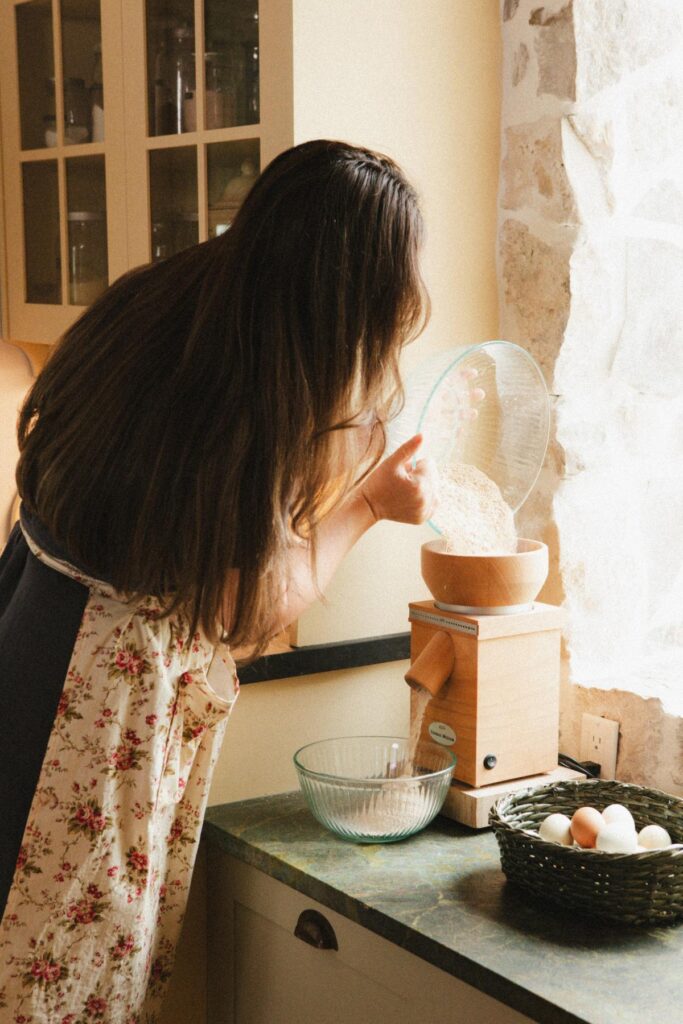
Milling wheat berries into freshly milled flour.

Traditional Poverty Breakfasts That Fill You Up

To view the recipe, click the title of interest, and it will expand.

This is my favorite oatmeal recipe, and my children ask for it daily: For every 1 cup of sprouted oats, grate 1 apple and cook it together in milk with a pinch of salt, a splash of vanilla, and a dash of cinnamon. Simmer on low until smooth, soft, and creamy—about 5-7 minutes.

*The apple naturally sweetens the oats, so there’s no need for honey or maple syrup. Adjust the fruit to your taste and use less if you like, or add sliced banana or frozen berries cooked right into the pot. If milk is scarce, you can dilute it with water, and it still turns out creamy. You can add butter to thin oatmeal for added richness as well.

For every 1 cup of buckwheat groats, add 2 cups of water or milk with a pinch of salt. Simmer gently on low heat until the groats are soft and the liquid absorbed — about 10–15 minutes.

Serve plain, or stir in a little butter or leftover fruit if you have it.

Sauté any chopped vegetables you have on hand (like onions, carrots, peppers, eggplant, and tomatoes ) in a little fat with a pinch of salt and your favorite seasonings until softened. Make small wells in the pan and crack in a few eggs, then cover and let them poach gently in the steam until the whites are set but the yolks are still soft.

A traditional Croatian recipe called Sataraš consists of stewed tomatoes, peppers, and onions in olive oil. You might want to try this recipe. I make it all summer long when those veggies are in season and serve it in many ways, including with rice and eggs.

Cook 2 cups of cold leftover rice in a pan with a little fat and chopped onion until hot, then push to the side and scramble in 2 eggs. Mix it all together and season with a pinch of salt or a little soy sauce if you have it.

Add small pieces of vegetables or leftover bacon, ham, or sausage to stretch it further.

This is the easiest way to use up sourdough discard: Pour sourdough discard straight into a hot pan with a little oil or fat and cook until set and golden. Top it however you like — with a fried egg, vegetables, or just eat it plain.

If the discard tastes too sour, mix in a little extra flour and water and either let it ferment for a couple of hours or use it immediately.

Add salt and your favorite seasonings directly into the discard for more flavor.

This is a traditional Balkan breakfast made from stale bread: Tear or cube stale bread into a bowl and pour over hot milk or tea until softened. Stir in a little butter or cheese if you have it, and add a pinch of salt.

It can be eaten plain, savory, or sweetened lightly with honey or sugar when available.

This is a simple fried bread that was common across the Balkans: Dip slices of stale bread into a mixture of eggs and a little milk with a pinch of salt. Fry in a pan with fat until golden on both sides.

Eat hot, either plain or sprinkled with a little sugar if you want it sweet.

I grew up on this and still love it dearly. It’s given to children for breakfast, but the coffee is limited to smaller quantities.

This was a common breakfast when there wasn’t much else in the house: Make a cup of coffee (you can use Turkish coffee or espresso as well) and add plenty of hot or steamed milk. Sweeten to taste. Tear day-old bread into pieces and soak it right in the cup until softened.

Eat it with a spoon, letting the bread soak up the sweetened coffee-milk.

Grate 2–3 potatoes and squeeze out the excess liquid, then mix with 1 egg, 2 spoonfuls of flour, and a pinch of salt. Drop spoonfuls into a hot pan with fat and fry until crisp and golden on both sides.

Eat hot, plain, or with a little sour cream or applesauce if you have it.

Whisk together 1 cup flour, 1 tablespoon sugar, 1 teaspoon baking powder, ½ teaspoon baking soda, a pinch of salt, 1 cup milk, 1 egg, and 1 tablespoon melted fat. Stir just until combined — the batter should be thick and a little lumpy.

Cook spoonfuls on a hot greased pan until bubbles form, then flip and cook the other side until golden. Serve hot with butter, a drizzle of honey or syrup, or a spoon of jam if you have it.

Long-Fermented Sourdough Discard Pancakes:

Mix 1 cup sourdough discard, 1 cup flour, and 1 cup milk or water in a bowl. Cover and let it rest on the counter for 6–12 hours (overnight works well).

When ready to cook, stir in 1 egg, 1 tablespoon melted fat, 1 teaspoon baking soda, 1 teaspoon sugar, and a pinch of salt. The batter will puff up.

Stir together 1 cup flour, 2 tablespoons sugar, 1 teaspoon baking powder, a pinch of salt, 1 cup water, leftover coffee, or tea, and 1 tablespoon oil or melted fat. Mix until just combined — the batter should be pourable but not runny.

Cook in a greased hot pan until bubbles form, then flip and brown the other side. Serve plain, with a little jam, or sprinkled with sugar if that’s all you have.

Bring 4 cups water and a pinch of salt to a boil. Slowly whisk in 1 cup cornmeal and reduce the heat. Cook, stirring often, until thick and smooth — about 20–30 minutes.

Serve hot in bowls with a little butter or milk, or let it cool in a dish until firm, then slice and fry in fat the next day for a crisp breakfast.

Growing up, my mom served this with plain yogurt for breakfast.

Heat a pan with a spoonful of saved bacon drippings, lard, or other fat. Lay in thick slices of day-old bread and fry until golden and crisp on both sides.

Serve hot, plain, or topped with a fried egg if you have one.

Stir together 1 cup cornmeal, 1 cup boiling water, a pinch of salt, and 1 tablespoon fat. Let it sit a few minutes to thicken, then spoon onto a hot greased pan.

Flatten slightly and cook until crisp and browned on both sides. Serve hot, plain, or with a drizzle of syrup, honey, or a pat of butter if you have it.

Mix together 2 cups flour, 1 tablespoon baking powder, ½ teaspoon baking soda, and a pinch of salt. Cut in 4 tablespoons cold butter or lard until crumbly. Stir in ¾ cup buttermilk or milk just until a soft dough forms.

Turn out onto a floured surface, pat down gently, and cut into rounds. Bake at 425°F for 12–15 minutes until golden and risen. Serve warm with butter, honey, or jam.

Stir together 2 cups flour, 1 teaspoon baking powder, a pinch of salt, and about ¾ cup water (add more if needed to form a stiff dough).

Knead lightly, then roll or pat into rounds or flatten into rustic shapes. Bake at 400°F for 10–12 minutes until set and lightly browned. These keep well and were often eaten plain or dunked into soup, broth, or milk.

Bring 4 cups of water and a pinch of salt to a boil. Slowly whisk in 1 cup of grits and reduce the heat to low. Cook, stirring often, until thick and creamy — about 20–25 minutes.

Serve hot with a spoon of butter, a little milk, or topped with a fried egg if you have it. Leftovers can be poured into a dish, cooled until firm, sliced, and fried the next day in fat.

Note: Grits, mush, and polenta are really the same thing: ground corn cooked into a hot porridge. The difference is mostly regional and in how finely the corn is ground—grits are coarser and common in the American South, mush was the old Midwestern name, and polenta is the Italian version. All of them were eaten hot, then cooled, sliced, and fried the next day.

Per 1 adult: peel and dice 1 large potato and slice ½ large onion. Fry together in 1 tablespoon fat until golden and crisp, about 10–12 minutes. Season with salt and pepper.

Top with a fried egg and meat if you have it.

Per 1 adult: mash 1 cup leftover mashed potatoes with 2 tablespoons flour and a pinch of salt. Form into 2 small patties. Fry in 1 tablespoon fat until browned on both sides. Serve plain or with a spoon of gravy if available.

Per 1 adult: shred 1 cup cabbage and sauté with 1/2 to 1 strip of bacon until softened, adding more fat if necessary, until cabbage is beginning to brown. Push to the side and crack in 1–2 eggs, cooking to your liking. Serve together from the same pan.

Note: Caramelize an onion with the bacon and cabbage for even more flavor.

Per 1 adult: chop ½ large potato, ½ carrot, and ½ cup cabbage (or whatever vegetable leftovers you have from last night’s dinner). Fry together in 1 tablespoon fat until browned and crisp. Add a spoon of cooked meat if available.

Per 1 adult: warm ½ cup cooked beans (pinto, navy, or lentils) with a splash of broth or water until soft and mashable. Spread over 1–2 slices toasted or fried bread. Season with salt, pepper, or a pinch of chili powder if you have it.

Per 1 adult: fry 1–2 slices day-old bread in 1 tablespoon drippings or fat until golden. Pour over with hot gravy (see gravy recipe below).

Heat 2 tablespoons drippings, lard, or butter in a pan. Stir in 2 tablespoons flour and cook until lightly browned. Slowly whisk in 1 cup water, milk, or broth (whatever is on hand) and cook until thick. Season with salt and pepper. This makes enough gravy for about 2 adults; double as needed.

Heat 2 tablespoons bacon drippings or lard in a skillet. Stir in 2 tablespoons flour and cook until golden. Slowly whisk in 1 cup milk and simmer until thick. Season generously with black pepper and a little salt. Serve over fried bread, biscuits, or potatoes.

Before we move on to lunch and dinner as well as the meal plan, I want to very briefly talk about bread, because if you’re poor, you’re probably eating a lot of the stuff, and there’s an easy way to make it better.

Bread That Fed the World Was Whole and Fermented (Sourdough)

I have some strong opinions on this topic and with good reason, and I’ll ask you to at least consider them before we move on: homemade sourdough bread, made with whole wheat, is cheaper than store-bought and far better. It’s easy to do with minimal effort. The slow fermentation doesn’t just improve the flavor and keeping quality, it makes the grain’s nutrients available in a way that simple yeast bread (unfermented) can’t.

That is why bread could serve as the backbone of the diet for centuries. Your ancestors likely relied on this stuff to survive, and it used to be very different from most of the breads available in the store today.

Bread in poverty diets was never meant to be empty filler. It was real food, made slowly, with care, and meant to sustain. A single loaf could carry a family through because it wasn’t stripped down the way modern bread is. Whole grains, fermented properly, gave strength and made it possible to live on very little else when times were lean.

So if you want to learn how to live off of extremely cheap meals without malnourishing yourself, I would strongly suggest you give your bread, the staff of life, the respect and consideration it deserves.

Poverty Lunches (Including Packed Lunches For Work)

To view the recipe, click the title of interest, and it will expand.

Reheat leftover stew or soup until piping hot, then pour it into a thermos. Pack with bread or a sandwich. If your soup is too thin, add some frozen or fresh vegetables or canned beans and simmer until they are softened.

Note: Put the kettle on to boil and then pour the boiling water into your thermos to heat it up while your stew, soup, or other hot lunch is being made or heated. It makes a significant difference in terms of heat retention.

Dice 1 small onion and sauté in some fat until golden. Add ½ cup cooked beans and 1 cup cooked rice, stirring together. Season with a pinch of chili powder, garlic powder, or Italian seasoning, and add a splash of broth or canned tomato if it looks dry.

Pack hot in a thermos.

Tuna Salad Sandwich

Mix ½ can tuna with 1 tablespoon mayo or mashed beans, plus diced onion or pickle. Season with salt, pepper, and a pinch of dill or chili powder. Spread onto 2 slices bread.

Pâté Sandwich

Another favorite I grew up eating almost daily: Spread 2–3 tablespoons pâté onto 2 slices bread. Add sliced onion or pickle if available.

Chicken Salad Sandwich

Chop ½ cup leftover chicken and mix with 1 tablespoon mayo and a little onion or celery if available. Spread onto bread.

BLT

Fry 2 slices bacon, then layer with lettuce and 1–2 slices tomato between 2 slices bread. Season tomato with salt and pepper. Spread with mayo if available.

Lard or Dripping Sandwich

Spread 1–2 teaspoons lard, bacon fat, or drippings over 2 slices bread. Sprinkle lightly with salt and pepper.

Beans on Bread

Mash ½ cup cooked beans with a pinch of salt, pepper, and garlic powder. Spread over 1–2 slices toasted bread.

Gravy Bread

Pour ½ cup hot gravy (milk gravy or broth-based) over 1–2 slices bread until soaked. Eat open-faced with a fork.

Fried Eggplant Sandwich

I grew up eating this every week, and it’s SO good: Slice eggplant into ½-inch rounds, no peeling necessary. Dip each slice first in flour, then in beaten egg, then in *breadcrumbs. Shake off excess each time. Fry in fat or oil until golden and crisp on both sides. Layer in 2 slices bread with mayo or sauce if you have it. *Add seasoning (like Italian) into the breadcrumb mixture.

Onions and Peppers with Cheese

Sauté 1 small onion and ½ pepper in 1 teaspoon fat until soft and golden. Season with salt, pepper, and a pinch of chili powder or Italian seasoning. Pile onto 2 slices bread with a thin slice of cheese.

Grilled Cheese

Butter or oil 2 slices bread. Place 1–2 thin slices cheese between them. Season with a light sprinkle of black pepper or garlic powder before frying in a hot pan until golden.

Grilled Onion and Cheese

Sauté ½ small onion in 1 teaspoon fat until golden. Season with salt, pepper, and a pinch of paprika or chili powder. Place between 2 slices bread with a thin slice of cheese and fry in a pan until crisp.

Grilled Tomato Sandwich

Layer 2–3 tomato slices between 2 slices bread with a thin smear of butter or mayo. Sprinkle with salt, pepper, and a pinch of oregano or Italian seasoning. Grill in a hot pan until crisp.

Grilled Potato Sandwich

Spread ½ cup mashed potatoes onto 2 slices bread. Season with salt, pepper, garlic powder, or onion powder. Grill in a pan with fat until golden.

Peanut Butter and Jam

Spread 2 tablespoons peanut butter and 1 tablespoon jam between 2 slices bread.

I pack my husband’s work lunch every single day. I use these large insulated Stanley Crocks most days because they keep a large quantity of food (like soups and stews) hot for a long time.

One (lazy) trick I have is to make a slow cooker meal—the NIGHT before—so that it’s ready by morning. You can also set a rice cooker going at the same time and have a complete hot homemade meal ready to pack bright and early. This works for the whole family, kids’ school lunches, too.

Another tip is to cook more than enough dinner the night before and reheat the leftovers inthe morning for lunches.

Related Articles: Create A Practical & Simple Homemaking Schedule That You Will Actually Keep

Extremely Cheap Dinner Ideas For Families

To view the recipe, click the title of interest, and it will expand.

Rice and Beans (Classic)

In a heavy pot, sauté 1 large onion, 1 carrot, 1 celery rib, 3 cloves garlic (minced), and 1 pepper (optional) in 2 tablespoons lard or bacon drippings until golden. Add 2 cans beans (drained and rinsed) and 4 cups water or broth. Bring to a simmer. Stir in 2 cups rinsed rice, 1½ teaspoons salt, ½ teaspoon black pepper, ½ teaspoon garlic powder, and 1 teaspoon chili powder or Italian seasoning. Cook until the rice is soft, about 20–25 minutes.

Rice and Beans – Slavic Variation

In a heavy pot, sauté 1 large onion, 1 carrot, 1 celery rib, 3 cloves garlic (minced), and 1 pepper (optional) in 2 tablespoons lard or bacon drippings until golden. Add 2 cans beans (drained and rinsed) and 4 cups water or broth. Bring to a simmer. Stir in 2 cups rinsed rice, ½ cup sauerkraut, 1½ teaspoons salt, ½ teaspoon black pepper, and 1 teaspoon paprika. Cook until the rice is soft, about 20–25 minutes.

Rice and Beans – Mediterranean Variation

In a heavy pot, sauté 1 large onion, 1 carrot, 1 celery rib, 3 cloves garlic (minced), and 1 pepper (optional) in 2 tablespoons fat or olive oil until golden. Add 2 cans beans (drained and rinsed) and 4 cups water or broth. Bring to a simmer. Stir in 2 cups rinsed rice, ½ cup canned tomatoes, 1½ teaspoons salt, ½ teaspoon black pepper, and 1 teaspoon oregano or Italian seasoning. Cook until the rice is soft, about 20–25 minutes.

Note on Using Dried Beans (Cheaper than Canned)
If starting with dried beans, soak 2 cups of beans in plenty of water overnight. Drain and rinse, then simmer in fresh water with a little salt and a bay leaf or onion half until tender, about 1–1½ hours (time varies by bean type).

Drain and use as directed in the recipe.

Substitution guide:

  • 1 cup dried beans = about 2½ cups cooked beans.
  • For recipes that call for 2 cups cooked beans, start with about ¾ cup dried.

Cook 2 cups rice. In a separate pan, sauté 1 large onion and 2 carrots in 2 tablespoons fat until golden. Add 2 cups cooked beans and 2 cups chopped cabbage or frozen vegetables. Stir in the rice, season with salt, pepper, garlic powder, and chili powder or Italian seasoning. Serve hot.

In a pot, sauté 1 large onion in 1 tablespoon fat. Add 2 tablespoons of tomato paste and stir until starting to darken. Add 4 diced potatoes, ½ head cabbage (shredded), and cover with 6 cups bone broth or water with bouillon. Simmer until tender, about 30 minutes. Season with salt, pepper, and a splash of vinegar before serving with bread.

Check out my recipe for red cabbage soup with bacon as well.

In a pot, brown ½ lb diced beef, pork, or chicken thighs in 2 tablespoons fat with 2 tablespoons of flour. Add 1 diced onion, 3 carrots, and 4 potatoes cut into chunks. Cover with 6 cups broth or water with bouillon. Simmer until tender, 45–60 minutes. Season with salt, pepper, or Italian seasoning.

Boil 12 cabbage leaves until soft. Mix 2 cups cooked rice, 1 cup beans or ½ lb ground meat, and 1 onion (diced and sautéed in 1 tablespoon fat). Season with 1½ teaspoons salt, ½ teaspoon black pepper, and ½ teaspoon garlic powder. Place spoonfuls into each cabbage leaf, roll up, and layer in a pot. Pour over 2 cups canned tomatoes and 1 cup broth. Cover and simmer 1 hour.

Can also be made with fermented whole head cabbages.

Boil 12 oz egg noodles or make homemade dumplings (like German spaetzle). In a large skillet, fry 6 slices bacon (diced small) until crisp with 1 diced onion. Stir in ½ head cabbage (shredded) and fry until soft and lightly browned. Add the drained noodles. Toss well and serve hot.

See my recipes for Homemade Egg Noodles as well as for Haluski.

Peel and grate 3 medium beets. Dice 2 carrots, 2 potatoes, and 1 onion. In a large pot, sauté the onion, carrots, and beets in 3 tablespoons fat until softened and lightly browned. Add the potatoes, ½ head shredded cabbage, and 2 cloves minced garlic. Cover with 8 cups bone broth or water with 2 bouillon cubes. Simmer 30–40 minutes until tender.

Season with 2 teaspoons salt, ½ teaspoon black pepper, and 1 tablespoon vinegar (or lemon juice) for brightness. Serve hot with a dollop of sour cream or plain yogurt if available, bread on the side, and a sprinkle of fresh dill if you have it.

See my recipe for Ukrainian Borscht if you want a beef-based, richer version.

Brown 1 lb ground beef with 1 large onion (diced) in 2 tablespoons fat until the meat is cooked through. Add ½ head cabbage (shredded) and cook until softened, about 10 minutes. Stir in 2 cloves garlic (minced) and 1 can diced tomatoes (14 oz).

Season with 2 teaspoons salt, ½ teaspoon black pepper, 1 teaspoon paprika, and ½ teaspoon dried oregano or Italian seasoning. Simmer 15 minutes until everything is tender and flavors are blended. Serve hot with bread or over rice.

Brown 1 lb ground beef with 1 large onion (diced) in 2 tablespoons fat until the meat is cooked through. Add ½ head cabbage (shredded) and cook until softened, about 10 minutes. Stir in 2 cloves garlic (minced) and 1 can diced tomatoes (14 oz).

Meanwhile, boil 12 oz pasta until just tender. Drain and stir into the cabbage and beef mixture. Season with 2 teaspoons salt, ½ teaspoon black pepper, 1 teaspoon paprika, and ½ teaspoon oregano or Italian seasoning. Simmer 5 minutes so the pasta absorbs the flavors. Serve hot.

In a large pot, brown ½ lb ground beef or pork with 1 large onion (diced) in 2 tablespoons fat until lightly browned. Add 2 cloves garlic (minced), 2 carrots (diced), 2 medium potatoes (diced), and ½ head cabbage (shredded). Stir and cook 5 minutes.

Add 1 can diced tomatoes (14 oz) and 6 cups bone broth or water with 2 bouillon cubes. Season with 2 teaspoons salt, ½ teaspoon black pepper, and 1 teaspoon paprika. Simmer 20 minutes. Stir in ½ cup uncooked rice and cook another 20 minutes, until the rice is tender and the vegetables are soft.

Optional: add 1/2 cup of sauerkraut at the same time as the rice.

In a large pot, sauté 1 large onion (diced), 2 cloves garlic (minced), 2 carrots (diced), and 2 medium potatoes (diced) in 2 tablespoons fat until softened. Add ½ head cabbage (shredded) and cook 5 minutes.

Add 1 can diced tomatoes (14 oz), 2 cans beans (rinsed), and 6 cups bone broth or water with 2 bouillon cubes. Season with 2 teaspoons salt, ½ teaspoon black pepper, and 1 teaspoon paprika. Simmer 20 minutes. Stir in ½ cup uncooked rice and cook another 20 minutes, until the rice and vegetables are tender.

Optional: add 1/2 cup of sauerkraut at the same time as the rice.

In a large pot, combine 6 cups bone broth (chicken, vegetable, or beef) and 2 cups tomato passata (or 1½ cans blended diced tomatoes). Bring to a gentle simmer. Stir in 1 tablespoon Italian seasoning, 2 teaspoons salt, and ½ teaspoon black pepper. Simmer 15–20 minutes.

Add 12–16 pierogi (fresh or frozen) and cook 8–10 minutes, until they float and are heated through.

Serve hot, topped with crumbled bacon and cubed or crumbled cheese (mozzarella, cheddar, or feta) if available.

Dice 4 medium potatoes and fry in 3 tablespoons fat until golden. Add ½ head cabbage (shredded) and 1 onion (sliced). Season with 2 teaspoons salt, ½ teaspoon black pepper, and ½ teaspoon garlic powder. Cook 20 minutes until browned and soft.

In a pot, sauté 1 onion (diced) and 3 cloves garlic (minced) in 2 tablespoons fat. Add 1 cup lentils, ½ head cabbage (shredded), and 6 cups water or broth. Season with 2 teaspoons salt, ½ teaspoon black pepper, and 1 teaspoon cumin or paprika. Simmer 30–35 minutes until lentils and cabbage are soft.

In a large pot, sauté 1 onion (diced) and 2 carrots (diced) in 2 tablespoons fat until golden. Add 1 lb smoked sausage or cheap fresh sausage (sliced), 2 cups sauerkraut, 3 diced potatoes, and 6 cups broth or water with 2 bouillon cubes. Season with 2 teaspoons salt, ½ teaspoon black pepper, and 1 teaspoon paprika. Simmer 30–40 minutes until tender.

See my recipe for German Sauerkraut Stew which includes homemade meatballs.

In a pot, sauté 1 onion (diced) in 2 tablespoons fat until golden. Add 2 cups sauerkraut, 2 carrots (diced), 2 potatoes (diced), and 6 cups broth or water with 2 bouillon cubes. Stir in 2 cloves garlic (minced), 1 bay leaf, and 1 teaspoon paprika. Simmer 40 minutes until everything is soft. Serve with bread.

In a skillet, sauté 1 onion (diced) and 3 cloves garlic (minced) in 2 tablespoons fat. Add 2 cups sauerkraut and cook 10 minutes. Stir in 2 cans beans (rinsed), ½ cup broth, and season with 2 teaspoons salt, ½ teaspoon black pepper, and 1 teaspoon caraway seeds (optional). Cook another 15 minutes and serve with bread or potatoes.

Cook 3 cups rice and let cool (best if made the day before). In a large skillet, heat 3 tablespoons fat. Add 1 onion (diced) and cook until golden. Stir in 2 cups shredded cabbage and 2 cups frozen vegetables, frying until softened.

Push vegetables to the side and scramble 4 eggs, then stir everything together with the rice. Season with 2 teaspoons salt, ½ teaspoon black pepper, 1 tablespoon soy sauce or vinegar (if available), and a pinch of garlic powder or chili flakes.

Note: This fried rice is endlessly flexible. A small handful of ground pork, a slice or two of chopped bacon, or even leftover bits of chicken can be added for extra flavor. Use whatever vegetables you have on hand — cabbage and frozen mixed vegetables keep it cheap, but carrots, peas, or peppers work just as well.

Dice 4 medium potatoes and fry in 3 tablespoons fat until golden. Add ½ head cabbage (shredded) and 1 onion (diced). Season with1 teaspoon salt, ½ teaspoon black pepper, and ½ teaspoon garlic powder. Cook until potatoes are soft and everything is browned. Optional: stir in small scraps of bacon or sausage.

Peel and grate 4 large potatoes. Mix with 1 egg, 2 cups flour, and 1½ teaspoons salt to make a sticky dough. Bring a large pot of salted water to a boil. Drop small spoonfuls of the dough (or push through a colander with large holes) into the water. Cook until the dumplings float, 3–4 minutes, then scoop out with a slotted spoon.

This is best done using a simpe and cheap spaetzle maker like the one at that link. It can also be used to make spaetzle (well, obviously).

Toss with 3 tablespoons bacon drippings or lard. Optional toppings: fried onions and cabbage, crumbled bacon, or a spoon of cheese or sour cream if available.

I recommend you look at my longer recipes for how to make this the first time. Check out Slovak Bryndzové Halušky and Slovak Strapačky Halušky.


In a bowl, whisk together 4 large eggs, 1 cup milk, and 1 teaspoon salt. Stir in 2 cups flour until a thick, sticky batter forms and beat the batter until bubbles begin to appear.

Bring a large pot of salted water to a boil. Working in batches, press the batter through a spaetzle maker or a colander with large holes directly into the boiling water. Cook until the dumplings reach the surface and then allow them to cook for 1-2 minutes more.

This recipe is a favorite in my home as spaetzle dumplings are very versatile and you can even ferment the batter to make a sourdough version. Check out my full-length spaetzle recipe blog post for more details and notes as well as photos. And check out my cheesy spaetzle recipe as well, it’s called Käsespätzle in German.

Sauté 1 large onion (diced) in 2 tablespoons fat until softened. Add 2 cloves garlic (minced) and cook briefly. Stir in ½ head cabbage (thinly sliced) and cook until wilted, about 8–10 minutes. Mix in 2 tablespoons flour. Add ½ cup milk and ¼ cup broth or water slowly, stirring to combine. Stir in ½ cup sour cream and warm through (do not boil). Season with 1½ teaspoons salt, ½ teaspoon black pepper, and a pinch of nutmeg.

Start by frying 4 slices bacon (chopped) or ½ lb sausage (crumbled) until crisp. Remove meat and leave fat in the pan. Use that fat in place of the “2 tablespoons fat” and proceed with the creamed cabbage recipe above. Stir the cooked bacon or sausage back in just before serving.

In a skillet, cook ¾ cup bacon or chopped speck until crisp (optional). Remove some fat if there’s too much. Add 1 large onion (finely chopped) and 3 cloves garlic (minced); sauté until translucent. Stir in 1 pound sliced mushrooms and cook until they release moisture and begin to brown. Sprinkle 1 tablespoon flour over them and stir in 1 tablespoon tomato paste. Gradually pour in 1 cup bone broth or stock, stirring constantly. Add 1 tablespoon Worcestershire sauce (optional) and simmer until slightly thickened. Temper and stir in ½ cup sour cream or cream (warm a little sauce into it first to prevent curdling). Season with salt and pepper to taste.

This sauce can be poured over schnitzel and/or spaetzle, egg noodles, pasta, gnocchi, or similar types of dumplings.

See my full post on German Hunter’s Sauce for in-depth notes and photos, as well as a printable recipe card.

Remove most of the meat from 1 rotisserie chicken, setting aside about 2 cups cooked chicken (or less, or none if you want). Place the carcass in a large pot with 10 cups water. Add 1 onion (quartered), 2 carrots (chopped), 2 celery ribs (chopped), and 2 cloves garlic. Simmer 1–2 hours, skimming as needed, to make broth. Strain and return the liquid to the pot.

Note: If you can’t spare the vegetables for the stock, use a substitute like Vegeta or another type of stock cube to flavor the broth.

Add the reserved chicken, 2 more carrots (sliced), and season with 2 teaspoons salt and ½ teaspoon black pepper. Simmer 20 minutes until carrots are tender.

Optional bulk-ups: stir in 1 cup cooked rice, 2 cups egg noodles, or 2 cups frozen vegetables.

Notes: This can be made without any extra chicken — the carcass and vegetables alone will give you a nourishing soup. If meat is scarce, add more rice, noodles, or vegetables to bulk it out.

Shred 2 cups chicken. In a baking dish, mix with 2 cups cooked rice, 1 can cream soup or 1 cup broth + ½ cup sour cream, and 1 cup frozen vegetables. Season with 1½ teaspoons salt, ½ teaspoon pepper, and a pinch of paprika. Top with ½ cup breadcrumbs and cheese if available. Bake at 375°F for 25 minutes.

Dice 4 medium potatoes and fry in 3 tablespoons fat until golden. Add 1 onion (diced) and 2 cups chopped rotisserie chicken. Season with 2 teaspoons salt, ½ teaspoon black pepper, and a pinch of garlic powder. Optional: add 1 cup frozen vegetables.

Boil 12 oz egg noodles. Mix with 2 cups shredded chicken, 1 can cream soup or 1 cup broth + ½ cup sour cream, and 1 cup frozen peas. Season with 1½ teaspoons salt and ½ teaspoon pepper. Spread in a baking dish, top with ½ cup breadcrumbs or cheese if available, and bake at 375°F for 25 minutes.

Sauté 1 onion (sliced) and 3 cups frozen or fresh vegetables in 3 tablespoons fat until crisp-tender. Add 2 cups shredded chicken and 3 tablespoons soy sauce or 1 tablespoon vinegar with 1 teaspoon salt. Stir-fry 5 minutes and serve over 4 cups cooked rice.

Sauté 1 large onion (diced), 2 carrots (diced), 1 sweet pepper, and 3 cloves garlic (minced) in 3 tablespoons fat until soft. Add 2 cups dried lentils (soaked or rinsed) and 4–5 cups broth or water. Add 1 large potato (diced) and 1 can tomatoes (or fresh equivalent). Stir in 1 tablespoon tomato paste, 2 teaspoons paprika, 1 teaspoon cumin, 1½ teaspoons salt, and ½ teaspoon black pepper. Simmer until lentils and potatoes are tender, about 30–40 minutes.

Stretch notes: You can bulk it with extra potatoes, barley, or rice. If no broth, use water with a stock cube and adjust salt. See my full-length post for lentil soup with pictures and a printable recipe card at that link.

Sauté 1 large onion (diced) and 2 cloves garlic (more if you love it) in 2 tablespoons fat until soft. Add 3–4 large potatoes (diced) and cover with 6 cups broth or water. Season with 1 teaspoon salt and ½ teaspoon black pepper. Simmer until potatoes are soft, about 20–25 minutes. Use an immersion blender or mash some potatoes for thickness. Optionally stir in ½ cup milk or cream near the end.

Variation: Turn this into a whole meal by serving it inside a hallowed out bread boule bowl. Use the bread to make croutons for the soup! Add croutons, grated cheese, or bits of fried bacon if you have them. See my full-length post for garlic soup with pictures and a printable recipe card at that link.

Brown 1 lb beef (cubed, cheap cut—even ground beef can be used) in 2 tablespoons fat. Remove meat. In same pot, sauté 1 onion (diced) and 3 cloves garlic (minced). Stir in 1 tablespoon tomato paste and 2 teaspoons sweet paprika (plus a bit of hot paprika if you want heat). Return meat, add 4 cups broth or water, plus 2 carrots, 2 potatoes, and 1 bell pepper (optional, diced). Season with 1½ teaspoons salt and ½ teaspoon black pepper. Simmer 1–1½ hours until meat is tender.

Serving note: Great over spaetzle, egg noodles, gnocchi, or bread. Variation: Use less meat or stretch it with beans or extra vegetables. See my full-length post for Hungarian Goulash with pictures and a printable recipe card at that link.

Sauté 1 onion (diced) and 3 cloves garlic (minced) in 2 tablespoons fat. Add 8 oz mushrooms (sliced) and cook until their liquid evaporates and they brown. Sprinkle 1 tablespoon flour and stir. Gradually add 4 cups broth or water and 1 cup milk or sour cream. Season with 1 teaspoon salt and ½ teaspoon black pepper. Simmer until flavors meld, about 15–20 minutes.

Stretch tip: Add diced potatoes or frozen vegetables, or omit milk and thicken a bit more if milk isn’t available. See my full-length posts for Hungarian Mushroom Soup and Slow Cooker Mushroom Soup with pictures and printable recipe cards at those links.

Make the dumplings ahead (overnight if possible): mince 1 lb liver (chicken, beef, or mixed) with 1 onion, fresh parsley, 1 egg, butter, salt & pepper, and stale bread or breadcrumbs moistened with milk. Chill.

Bring 3 quarts bone broth (beef preferred) or water + 2 bouillon cubes to a simmer. Add 2 cups diced carrots, 1 cup celery, and 1 bay leaf. Simmer ~5 minutes. Drop formed dumplings into the simmering broth one by one. Cook ~20 minutes until they float and are set.

Season with salt & pepper. Garnish with parsley.

Variation Notes:

  • You can soak liver in milk for 2-6 hours to mellow flavor before mincing (especially older liver).
  • For a lean version, reduce or omit butter in the dumplings and use higher ratio of bread.
  • Add potatoes, barley, or extra vegetables if you need more bulk.
  • You can make this without any meat other than liver — the dumplings + broth + vegetables make a nourishing bowl even if meat is minimal.

Soak 2 cups dried beans overnight (if using). In a heavy pot, sauté 2 onions (diced), 4 carrots (diced), and 2 ribs celery (chopped) in 2 tablespoons fat until softened (8–10 minutes). Add 5 cloves garlic (minced) and a bay leaf; stir 1 minute. Add the ham bone and soaked beans (or 2 cans beans, drained). Cover with water so bone is submerged 2 inches. Bring to boil, then simmer covered for 2–2½ hours.

After 2 hours, add 1 16-oz can tomatoes and 4 large potatoes (diced). Simmer until potatoes are tender, about 30 minutes. Taste and adjust with salt & pepper. Remove bone, stir in any leftover ham meat, and garnish with fresh parsley.

See my full-length post for Leftover Ham Bone Bean Soup with pictures and a printable recipe card at that link.

Notes & Variations:

  • Use canned beans if you didn’t soak dried — reduce simmer time accordingly.
  • Bulk with extra potatoes, root vegetables, or frozen vegetables.
  • Use water + bouillon if you don’t have bone broth.
  • Leave out meat scraps (just use the bone) and stretch with more beans/veg.

In a large pot, sauté 1 onion (diced), 2 carrots (diced), and 2 celery ribs (diced) in 2 tablespoons fat until softened. Add 3 cloves garlic (minced), 1 bay leaf, and ½ teaspoon thyme. Stir in 2 cups dried split peas (rinsed), 2 cups chopped leftover ham, 2 medium potatoes (diced), and 8 cups bone broth or water with 2 bouillon cubes.

Season with 2 teaspoons salt and ½ teaspoon black pepper. Bring to a boil, then lower heat and simmer uncovered 1–1½ hours, stirring occasionally, until peas and potatoes are soft and the soup has thickened.

See my full-length post for German Split Pea Soup with pictures and a printable recipe card at that link.

Slice 6 medium potatoes and 1 onion thinly. Layer in a greased baking dish with 2 cups diced leftover ham. Season each layer with salt and pepper. Pour over 3 cups milk or broth and dot with 3 tablespoons fat or butter. Bake covered at 375°F for 40 minutes, then uncover and bake another 20 minutes until golden and bubbling.

In a skillet, fry 1 onion (diced) in 2 tablespoons fat. Add ½ head cabbage (shredded) and cook until softened, about 10 minutes. Stir in 2 cups diced leftover ham and 2 medium potatoes (diced, pre-boiled or parboiled). Season with 2 teaspoons salt, ½ teaspoon black pepper, and a pinch of paprika. Cook until potatoes are browned.

Cook 3 cups rice and let cool. In a large skillet, heat 3 tablespoons fat. Add 1 onion (diced) and 2 cups frozen vegetables, frying until softened. Push to the side and scramble 3 eggs. Stir in 2 cups diced leftover ham and the rice. Season with 3 tablespoons soy sauce or 1 tablespoon vinegar + 1 teaspoon salt.

Boil 12 oz pasta until just tender. Reserve 1 cup pasta water. In a skillet, melt 4 tablespoons butter. Add 1 onion (diced) and cook until soft and golden. Stir in 2 cups diced leftover ham and 2 cups frozen peas.

Add ½ cup reserved pasta water. Toss in the drained pasta, mixing well so the butter coats everything. Season with 2 teaspoons salt and ½ teaspoon black pepper. Optional: stir in ½ cup grated cheese or a spoonful of sour cream if available.

Soak 2 slices stale bread in ½ cup milk or water, then mash. Mix with 1 lb ground beef, 1 onion (grated or very finely diced), 1 egg, 2 cloves garlic (minced), 2 teaspoons salt, ½ teaspoon pepper, and 1 teaspoon paprika or Italian seasoning. Form into small balls. Fry in 3 tablespoons fat until browned, then simmer in 3 cups tomato sauce or broth for 20 minutes.

Meatballs are great for meal prep as they can be frozen, and they’re a great way to make meat stretch even further by adding bread or breadcrumbs. Use beef, pork, or a mixture of the two meats as ground pork tends to be even cheaper.

Here are some more meatballs recipes from my blog:

Mix 1 lb ground beef with 1 cup oats, 1 onion (diced), 1 egg, 2 cloves garlic (minced), 2 teaspoons salt, ½ teaspoon black pepper, and ½ cup broth or tomato sauce. Shape into a loaf and place in a greased pan. Bake at 375°F for 45 minutes. Optional: brush with a spoon of ketchup or tomato paste before baking.

Halve and hollow 4 bell peppers. Mix 1 lb ground beef with 1 cup cooked rice, 1 onion (diced, sautéed), 2 teaspoons salt, ½ teaspoon pepper, and 1 teaspoon paprika. Stuff peppers and place in a baking dish. Pour over 2 cups tomato sauce or broth. Cover and bake at 375°F for 45 minutes.

Brown ½ lb ground beef with 1 onion (diced) and 2 carrots (diced) in 2 tablespoons fat. Stir in 1 cup cooked beans or lentils to stretch the meat. Season with 2 teaspoons salt, ½ teaspoon black pepper, and 1 teaspoon paprika. Spread into a baking dish. Top with 4 cups mashed potatoes. Bake at 375°F for 25 minutes until golden.

Sauté 1 onion (diced), 2 carrots (diced), and 2 ribs celery (diced) in 2 tablespoons fat until softened. Add 2 cups cooked beans or lentils, 1 cup frozen vegetables, and 1 cup broth or water with a bouillon cube. Season with 2 teaspoons salt, ½ teaspoon black pepper, and 1 teaspoon paprika. Simmer 5 minutes.

Mix 1 lb ground beef or pork (or a mix) with 1 cup breadcrumbs or oats, 1 egg, 1 onion (grated or finely diced), 2 teaspoons salt, and ½ teaspoon black pepper. Shape into 6 patties. Fry in 3 tablespoons fat until browned, then remove.

In the same pan, sauté 1 large onion (sliced). Sprinkle in 2 tablespoons flour, then whisk in 3 cups broth or water with bouillon. Simmer until thickened, season with salt and pepper, and return patties to the pan to cook another 10 minutes.

Parboil 8 large cabbage leaves until pliable. Mix 1 lb ground beef or pork (or a mix) with 1 cup cooked rice, 1 onion (diced, sautéed), 2 cloves garlic (minced), 2 teaspoons salt, and ½ teaspoon black pepper. Place a scoop in each leaf, roll, and place seam-side down in a baking dish. Pour over 2 cups tomato sauce or broth, cover, and bake at 350°F for 1 hour.

Cut 2 lbs pork shoulder (cheap cut) into chunks. Brown in 3 tablespoons fat, then remove. In the same pot, sauté 1 onion (diced), 2 carrots (diced), and 2 cloves garlic (minced). Return pork, add ½ head cabbage (shredded), 2 cups broth or water with bouillon, 2 teaspoons salt, ½ teaspoon pepper, and 1 teaspoon paprika. Cover and simmer 1½–2 hours until tender.

Slice 1 lb pork belly into small pieces. Fry slowly on low heat until fat renders and meat crisps. Remove pork, leaving fat in the pan. Fry 4 medium potatoes (diced) and 1 onion (diced) in the fat until golden. Return pork, season with 2 teaspoons salt and ½ teaspoon black pepper, and cook another 5 minutes.

Place 2 lbs pork hocks or cheap ribs in a large pot with 8 cups water or broth. Add 1 onion (diced), 2 carrots (diced), and 3 medium potatoes (diced). Season with 1 teaspoon salt, ½ teaspoon black pepper, and 1 bay leaf. Simmer 1½–2 hours until meat is tender and falls off the bone.

Stir in 2 cups sauerkraut during the last 30 minutes of cooking. Adjust seasoning before serving.

Check out my recipes for Croatian Grah and Bosnian Grah if you like this type of food. Another one is Segedinsky Goulash which is a stew of pork shoulder and sauerkraut.

Mix 1 lb ground pork with 1 cup breadcrumbs or oats, 1 egg, 1 onion (grated), 2 teaspoons salt, and ½ teaspoon pepper. Shape into 6 patties. Fry in 3 tablespoons fat until browned on both sides and cooked through. Serve with potatoes or cabbage.

In a pot, sauté 1 onion (diced), 2 cloves garlic (minced), and 2 tablespoons tomato paste in 3 tablespoons fat. Add 2 cans chickpeas (rinsed), 6 cups water or broth, 2 teaspoons salt, and ½ teaspoon pepper. Simmer 20 minutes. Stir in 8 oz short pasta and cook until tender, about 10 minutes.

Mash 4 cups boiled potatoes with 2 tablespoons fat, 1 egg, 2 teaspoons salt, and ½ teaspoon pepper. Press into a greased baking dish to form a crust. Fill with a mixture of 2 cups cooked beans or vegetables (cabbage, carrots, onions) and a small amount of meat if available. Top with more mashed potatoes if desired. Bake at 375°F for 30 minutes until set and golden.

Toast 1½ cups buckwheat groats or millet in a dry pan, then add 3 cups water or broth and simmer until tender. In a skillet, fry 1 onion (sliced) and 2 cups cabbage (shredded) in 3 tablespoons fat. Stir into the cooked grains, season with 2 teaspoons salt and ½ teaspoon black pepper. Optional: add a spoon of bacon drippings.

Boil 4 medium potatoes, mash, and mix with 1 large onion (sliced and fried until golden in 3 tablespoons fat). Season with 2 teaspoons salt and ½ teaspoon black pepper. Drop spoonfuls of the mixture into a hot skillet with fat, flatten slightly, and fry until crisp on both sides.

Yes, it’s hard. You’re not alone.

Join My FREE 7-Day Homemaking Essentials Email Course & Grab my Meal Plan with 50+ recipes
A photo of Jana Dziak, founder of The Peasant's Daughter and Heritage Kitchen Revival standing in her kitchen.

30-Day Poverty Meal Plan

(Family of 4 — 2 adults, 2 children. No snacks or desserts, just breakfast, lunch, and dinner.)

Week 1

Day 1

  • Breakfast: Oatmeal with grated apple, cinnamon, and bread with butter
  • Lunch: Pâté sandwiches, carrot sticks
  • Dinner: Cabbage & Ground Beef Skillet with rice

Day 2

  • Breakfast: Buckwheat porridge with butter and bread
  • Lunch: Leftover cabbage skillet with bread
  • Dinner: Rotisserie Chicken Soup with rice and frozen vegetables

Day 3

  • Breakfast: Sourdough discard flatbreads topped with onion and eggs
  • Lunch: Tuna salad sandwiches, apples
  • Dinner: Shepherd’s Pie (meat + beans, topped with mashed potatoes)

Day 4

  • Breakfast: Bijela kava with stale bread in hot milk
  • Lunch: Ham and potato hash with bread
  • Dinner: Baked Chicken Thighs with sauerkraut and potatoes

Day 5

  • Breakfast: Pancakes with butter or applesauce
  • Lunch: Lentil soup with bread
  • Dinner: Hungarian Mushroom Soup with spaetzle or noodles

Day 6

  • Breakfast: Fried bread with milk gravy
  • Lunch: Fried eggplant sandwiches
  • Dinner: Split Pea Soup with ham and potatoes

Day 7

  • Breakfast: Vegetable hash with poached eggs and bread
  • Lunch: Rice and beans with fried onion and spices
  • Dinner: Chicken Thigh Stew with carrots, onions, and potatoes

Week 2

Day 8

  • Breakfast: Oatmeal with bananas, bread on the side
  • Lunch: Cold pasta salad with ham and peas
  • Dinner: Borscht with bread

Day 9

  • Breakfast: Buckwheat porridge with butter
  • Lunch: Leftover borscht with bread
  • Dinner: Cabbage Roll Soup with rice and potatoes

Day 10

  • Breakfast: Potato pancakes with sour cream if available
  • Lunch: Chicken noodle casserole (leftover chicken)
  • Dinner: Pork & Sauerkraut Stew with potatoes

Day 11

  • Breakfast: Buckwheat porridge with milk and bread
  • Lunch: Bean and vegetable soup with bread
  • Dinner: Meatloaf with oats, mashed potatoes, and frozen vegetables

Day 12

  • Breakfast: Spaetzle fried with eggs
  • Lunch: Pâté sandwiches, apples
  • Dinner: Salisbury steak (beef or pork mix) with onion gravy and potatoes

Day 13

  • Breakfast: Bijela kava with stale bread
  • Lunch: Lentil stew with bread
  • Dinner: Mushroom barley stew with cabbage

Day 14

  • Breakfast: Pancakes with applesauce
  • Lunch: Leftover mushroom barley stew with bread
  • Dinner: Braised pork shoulder with cabbage and carrots

Week 3

Day 15

  • Breakfast: Oatmeal with frozen fruit, bread with butter
  • Lunch: Ham fried rice with vegetables and egg
  • Dinner: Cabbage and noodles with cottage cheese if available

Day 16

  • Breakfast: Vegetable hash with fried eggs and bread
  • Lunch: Split pea soup with bread
  • Dinner: Stuffed peppers with rice and ground meat

Day 17

  • Breakfast: Sourdough discard flatbreads with jam or butter
  • Lunch: Tuna salad sandwiches
  • Dinner: Hungarian Goulash with potatoes and carrots

Day 18

  • Breakfast: Buckwheat porridge with butter and bread
  • Lunch: Lentil soup with bread
  • Dinner: Halušky dumplings with cabbage and bacon fat

Day 19

  • Breakfast: Oatmeal with apples, bread with butter
  • Lunch: Chicken and vegetable stir-fry with rice
  • Dinner: Potato and cabbage hash with bread

Day 20

  • Breakfast: Pancakes with butter
  • Lunch: Ham and bean casserole
  • Dinner: Pierogi soup with tomato broth

Day 21

  • Breakfast: Bijela kava with stale bread
  • Lunch: Rice and beans with bread
  • Dinner: Scalloped potatoes with ham

Week 4

Day 22

  • Breakfast: Oatmeal with grated apple, bread with butter
  • Lunch: Lentil salad with vinegar dressing, bread
  • Dinner: Shepherd’s Pie (meatless, beans and vegetables, topped with mashed potatoes)

Day 23

  • Breakfast: Vegetable hash with poached eggs and bread
  • Lunch: Pâté sandwiches
  • Dinner: Cabbage and lentil stew with bread

Day 24

  • Breakfast: Buckwheat porridge with milk, bread with butter
  • Lunch: Fried eggplant sandwiches
  • Dinner: Pork belly and potatoes with onion

Day 25

  • Breakfast: Potato pancakes with sour cream if available
  • Lunch: Split pea soup with bread
  • Dinner: Pasta with ham and peas in buttery sauce

Day 26

  • Breakfast: Oatmeal with bananas, bread with butter
  • Lunch: Tuna salad sandwiches
  • Dinner: Beef and barley soup with cabbage

Day 27

  • Breakfast: Fried bread with milk gravy
  • Lunch: Lentil stew with bread
  • Dinner: Cabbage and noodles fried in bacon fat

Day 28

  • Breakfast: Pancakes with applesauce
  • Lunch: Chicken noodle salad (leftovers)
  • Dinner: Salt cod or canned fish with potatoes and onions

Day 29

  • Breakfast: Oatmeal with apple and cinnamon, bread with butter
  • Lunch: Rice and beans with bread
  • Dinner: Bread dumplings in broth with vegetables

Day 30

  • Breakfast: Sourdough discard flatbreads with eggs
  • Lunch: Borscht with bread
  • Dinner: Potato crust pie filled with beans and cabbage

30-Day Poverty Meal Plan Grocery List

Grains & Staples

  • All-purpose or whole wheat flour: 50 lbs (bread, flatbreads, pancakes, dumplings)
  • Rolled/sprouted oats: 10 lbs
  • Rice: 20 lbs
  • Buckwheat or millet: 5 lbs
  • Egg noodles / pasta (or homemade from flour + eggs): 10 lbs
  • Barley: 5 lbs

Beans & Legumes

  • Dried beans (pinto, navy, kidney, black): 12 lbs
  • Lentils: 8 lbs
  • Split peas: 8 lbs
  • Canned beans (optional backup): 8–10 cans

Root Vegetables & Alliums

  • Potatoes: 100 lbs (≈ 2–3 medium/day per person)
  • Carrots: 20 lbs
  • Onions: 25 lbs
  • Garlic: 3–4 lbs

Cabbage & Other Vegetables

  • Green or white cabbage: 6 heads (≈ ½ head per week)
  • Frozen mixed vegetables (peas, carrots, beans, corn): 12–15 lbs
  • Sauerkraut: 1 large jar (64 oz) or homemade

Fruit

  • Apples: 40–50 (about 1 every other day for oatmeal/lunches)
  • Bananas or seasonal fruit: 12–15 lbs (rotating for breakfast)

Meat & Protein

  • Chicken thighs: 20 lbs
  • 1 rotisserie chicken (or equivalent whole bird)
  • Ground beef or pork: 12 lbs
  • Pork shoulder, belly, or hocks/ribs: 12 lbs
  • Ham (with bone if possible): 6–8 lbs
  • Bacon: 3 lbs
  • Liver (for dumplings/pâté): 2–3 lbs
  • Canned tuna: 6 cans
  • Optional salted/dried fish (or canned sardines/mackerel): 2–3 lbs

Dairy & Eggs

  • Milk: 4–5 gallons (for porridge, soups, sauces, baking)
  • Butter/lard/oil
  • Eggs: 6 dozen
  • Sour cream/yogurt (optional if affordable): 2 quarts
  • Cheese (optional, if available frugally): 1–2 lbs

Pantry Flavorings & Seasonings

  • Tomato products (passata, diced, or paste): 12–15 cans (14 oz)
  • Bouillon cubes or Vegeta
  • Vinegar
  • Salt
  • Black pepper
  • Paprika
  • Italian seasoning, chili or taco mix
  • This list is baseline for one month — many families will already have oils, salt, vinegar, and seasonings stocked.
  • Meat quantities are modest: usually ½–1 lb per dinner, stretched with beans, rice, cabbage, or potatoes.
  • Bread, potatoes, rice, and fat are the calorie backbones — always bulk meals with one of these.
  • Frozen vegetables are included for convenience, but seasonal fresh or preserved vegetables can be swapped in.

Feeding a family well on a very tight budget is possible when you focus on the humble staples that have sustained generations before us — bread, beans, rice, potatoes, cabbage, and a little meat stretched with care. This 30-day plan isn’t glamorous, but it is filling, nourishing, and rooted in real peasant and poverty cooking traditions from across the world. With a small pantry and some planning, you can put wholesome meals on the table every single day without fear of going hungry or broke.

Leave a Reply

Your email address will not be published. Required fields are marked *

This site uses Akismet to reduce spam. Learn how your comment data is processed.