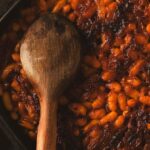
Prebranac: Serbian Baked Beans
Prebranac is a Serbian baked bean dish with caramelized onions and simple seasonings. A perfect vegan main or hearty side.
Servings: 6 servings
Calories: 348kcal
Equipment
- Large bowl for soaking the beans overnight
- Large Pot to cook the beans
- Large skillet or frying pan for caramelizing the onions
- Wooden spoon or spatula
- Sharp knife & cutting board
- Baking dish for layering and baking the dish.
Ingredients
- 2 cups large dried white beans e.g., tetovac, cannellini, Great Northern
- 3 large onions thinly sliced
- 2 cloves garlic minced
- ¼ cup oil or fat sunflower oil is traditional, I prefer to use lard or avocado oil.
- 2 teaspoons sweet Hungarian paprika
- ½ teaspoon smoked paprika optional
- ½ teaspoon vegeta
- 1 bay leaf
- 1 teaspoon dried thyme optional
- 1 teaspoon sea salt adjust to taste
- ½ teaspoon freshly ground black pepper
- ¼ cup tomato paste optional
- ¼ cup water or reserved bean cooking liquid if needed
Instructions
- Prepare the Beans: Begin by rinsing the dried beans under cold water, then soak them 8-12 hours or overnight in plenty of fresh water. Once soaked, drain and transfer the beans to a pot.
- Add 4 cups of fresh water, a bay leaf, and a pinch of salt. Bring to a boil, reduce the heat to a simmer, and cook until tender but not mushy—this usually takes 1.5 - 2 hours. Drain the beans, reserving about 1/2 cup of the cooking liquid
- Caramelize the Onions Most of The Way: While the beans are cooking, heat your fat or oil in a large skillet over medium heat. Add the sliced onions and cook slowly, stirring frequently, until soft and lightly caramelized. This process takes about 25-30 minutes, so keep the heat low to medium to avoid burning.
- Don’t let the onions get very deeply browned. We still have to bake the dish. You want a light gold color.
- Get your oven preheating at some point so that it's ready to go once the beans and onions are done and ready to bake. Preheat your oven to 375°F (190°C).
- Add Aromatics and Seasonings: Once the onions are ready, stir in the rest of the ingredients, excluding the paprika so it does not burn. Add the minced garlic, tomato paste, Vegeta, thyme (if using), sea salt, and black pepper. Let the spices bloom for about a minute before adding the paprika. Stir until well combined. Turn off the heat.
- Assemble & Bake the Dish: In a baking dish, layer half the cooked beans on the bottom. Spread half the onion mixture on top. Repeat with the remaining beans and onion mixture. If the dish looks dry, pour the reserved bean cooking liquid or water evenly over the layers.
- Cover the baking dish with foil or a lid and bake for 30 minutes. Then, uncover and bake for another 20–30 minutes, until the top is slightly browned and the mixture is bubbling.
Notes
Prebranac is best served warm, accompanied by a slice of crusty rustic sourdough bread. It tastes even better the next day, so make a big batch and eat it through the week.
How to Store and Reheat Prebranac
Storing:
A great tip for preparing beans is to bring them to a boil in fresh water for 5 minutes, then discard that first water before continuing with the recipe. This step can help reduce the compounds in beans that cause bloating or gas, resulting in a more easily digestible dish. After discarding the water, replace it with fresh water and proceed with cooking for the best flavor and texture.
- Refrigeration: Transfer cooled Prebranac to an airtight container and store it in the refrigerator for up to 4 days.
- Freezing: For longer storage, place the dish in a freezer-safe container or zip-top bag, removing as much air as possible. It can be frozen for up to 3 months. Allow it to thaw overnight in the refrigerator before reheating.
- Oven: Preheat the oven to 350°F (175°C). Place the beans in an oven-safe dish, cover with foil to retain moisture, and heat for about 20–25 minutes, or until warmed through.
- Stovetop: Reheat in a skillet or saucepan over low to medium heat, adding a splash of water or reserved bean liquid if the mixture looks dry. Stir occasionally until heated through.
- Microwave: For a quick option, transfer a portion to a microwave-safe dish, cover with a microwave-safe lid or wrap, and heat in 1-minute intervals, stirring in between, until warm.
Nutrition
Calories: 348kcal | Carbohydrates: 51g | Protein: 17g | Fat: 10g | Saturated Fat: 1g | Polyunsaturated Fat: 1g | Monounsaturated Fat: 7g | Sodium: 583mg | Potassium: 1456mg | Fiber: 12g | Sugar: 6g | Vitamin A: 587IU | Vitamin C: 8mg | Calcium: 191mg | Iron: 8mg
