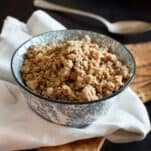
Boiling Ground Beef {How & Why}
But there are times when boiling ground beef makes a lot of sense. Especially when preparing meals for the freezer or making certain recipes that require lean beef results.
Calories: 1152kcal
Ingredients
- 1 lbs ground beef
Instructions
- Fill your pot with cold water and add some salt if desired. How much water you use will depend on the amount of beef and the pot size. All that matters is your ground beef should be fully submerged.
- Break up the large clump of ground beef with your spoon, separating it into smaller pieces. By doing this, you'll ensure the meat cooks evenly.
- Put the burner onto a high setting, and bring your water to boil; this should take 3-5 minutes.
- Once you have nicely boiling water going, add your raw ground beef in pieces. Turn the temperature down to a medium heat setting, and stir the beef as it boils.
- Cook your ground beef until it has gone completely brown and is no longer pink. Continue stirring throughout the cooking process to keep the meat evenly cooked; this should take around 3-5 minutes.
- The more you stir your beef, the more you'll break up the meat into finer pieces. You can stir less if you prefer your ground beef to have a chunkier texture.
- When the beef reaches a temperature of 160 degrees Fahrenheit, it should be well-browned. Visually, it wool look cooked with no pink parts.
Notes
Straining the Ground Beef
Once your beef is fully cooked, it's time to strain the water.- Place your strainer over a large bowl. Although you should never pour this hot water and fat down the sink as it can clog drains, I recommend placing the straining equipment in the sink to make cleaning any spills easier.
- Pour your hot water and ground beef into the strainer. Use caution to avoid spilling any hot water on yourself!
- If your meat still looks a little oily, you can pour extra hot water over the ground beef for a final rinse.
- You can drain your meat of excess water by leaving it on a strainer above a bowl or placing it on paper towels.
- Your boiled ground beef is now ready for use.
Nutrition
Serving: 0.5cups | Calories: 1152kcal | Protein: 78g | Fat: 91g | Saturated Fat: 35g | Polyunsaturated Fat: 2g | Monounsaturated Fat: 40g | Trans Fat: 6g | Cholesterol: 322mg | Sodium: 304mg | Potassium: 1225mg | Calcium: 82mg | Iron: 9mg
